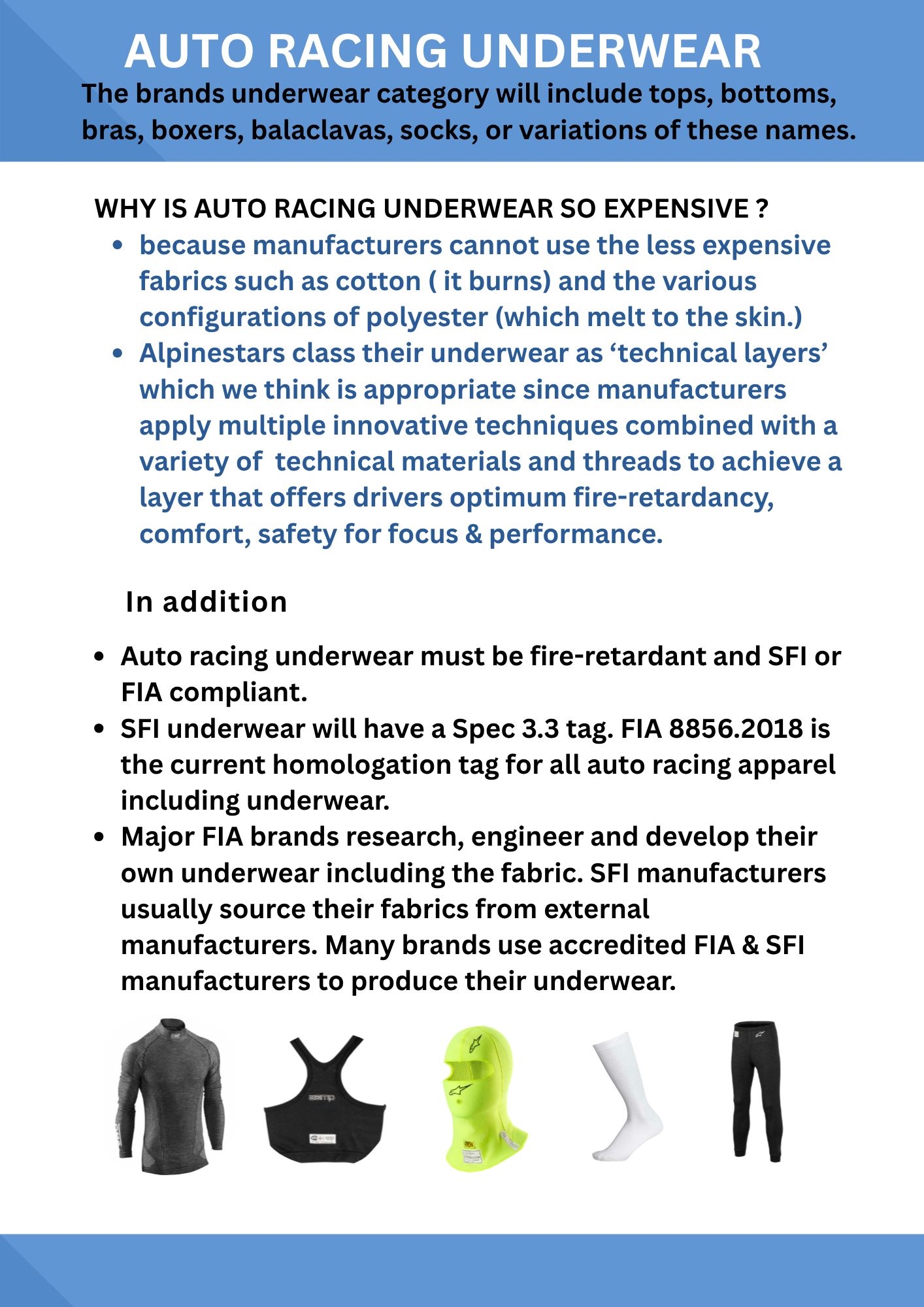
FIRE RETARDANT UNDERWEAR
AND WHY IS IT SO EXPENSIVE?
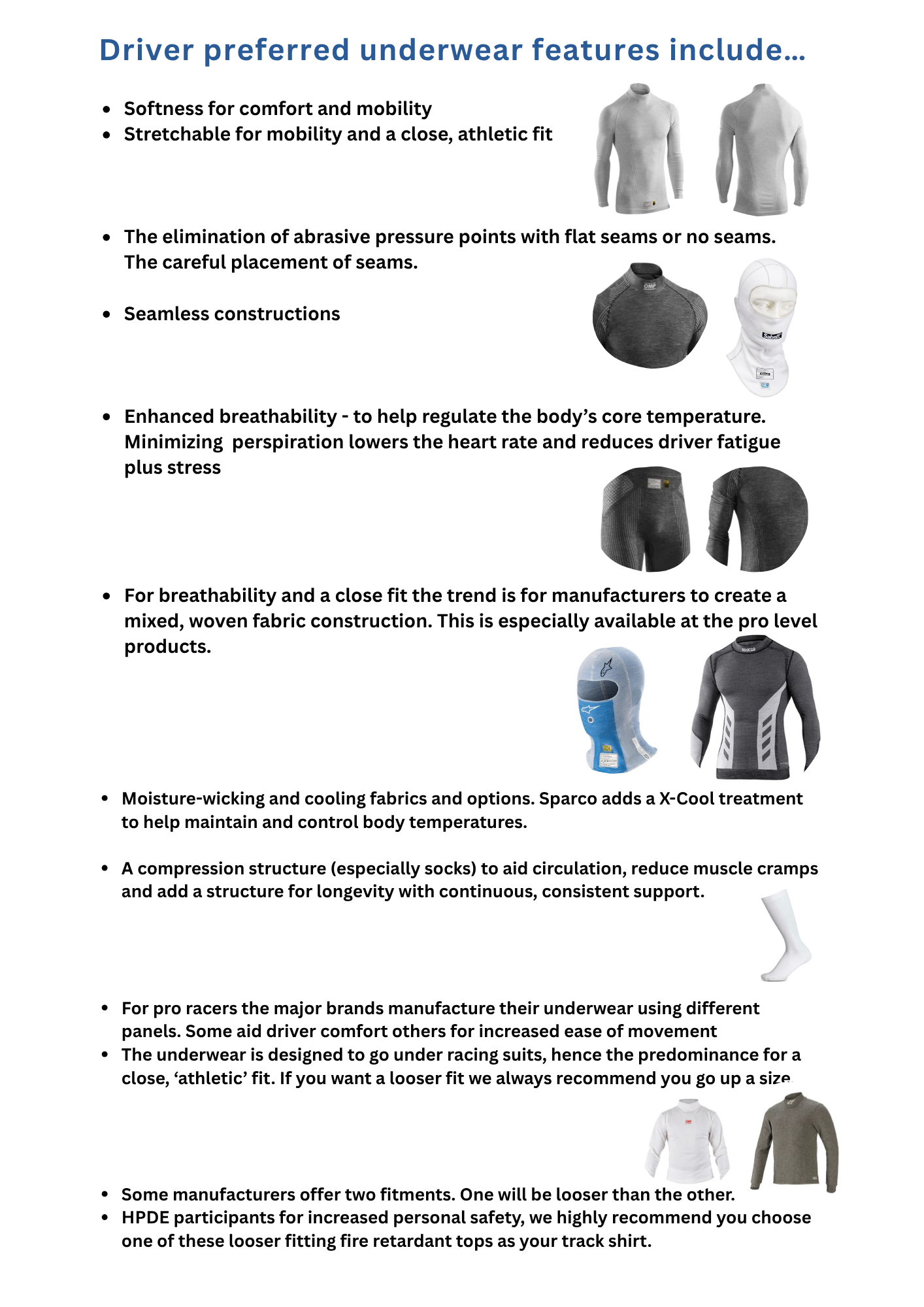
WEARING FIRE-RESISTANT UNDERWEAR SIGNIFICANTLY INCREASES YOUR TPP
(Thermal Protective Performance Test)
“Another way to obtain extra air gaps is to wear racing underwear. Fire resistant underwear should be worn with every type of driver suit, especially single layer suits because it will double the minimum protection time (min +3 seconds). … It is certified through SFI Spec 3.3 for Driver Accessories and undergoes the same TPP and flammability tests as the driver suit outerwear.” SFI Foundation
The FIA does not have a separate spec for underwear. It has to meet the same standards as all FIA racing apparel.
The Thermal Protective Performance device (TPP) was developed to measure the time elapsed for convective and radiant heat to penetrate through a protective composite fabric system - resulting in a 2nd degree burn injury to human skin. Remember, wearing underwear adds to the number of air layers. Additional air pockets, air layers slows the passage of a heat source.
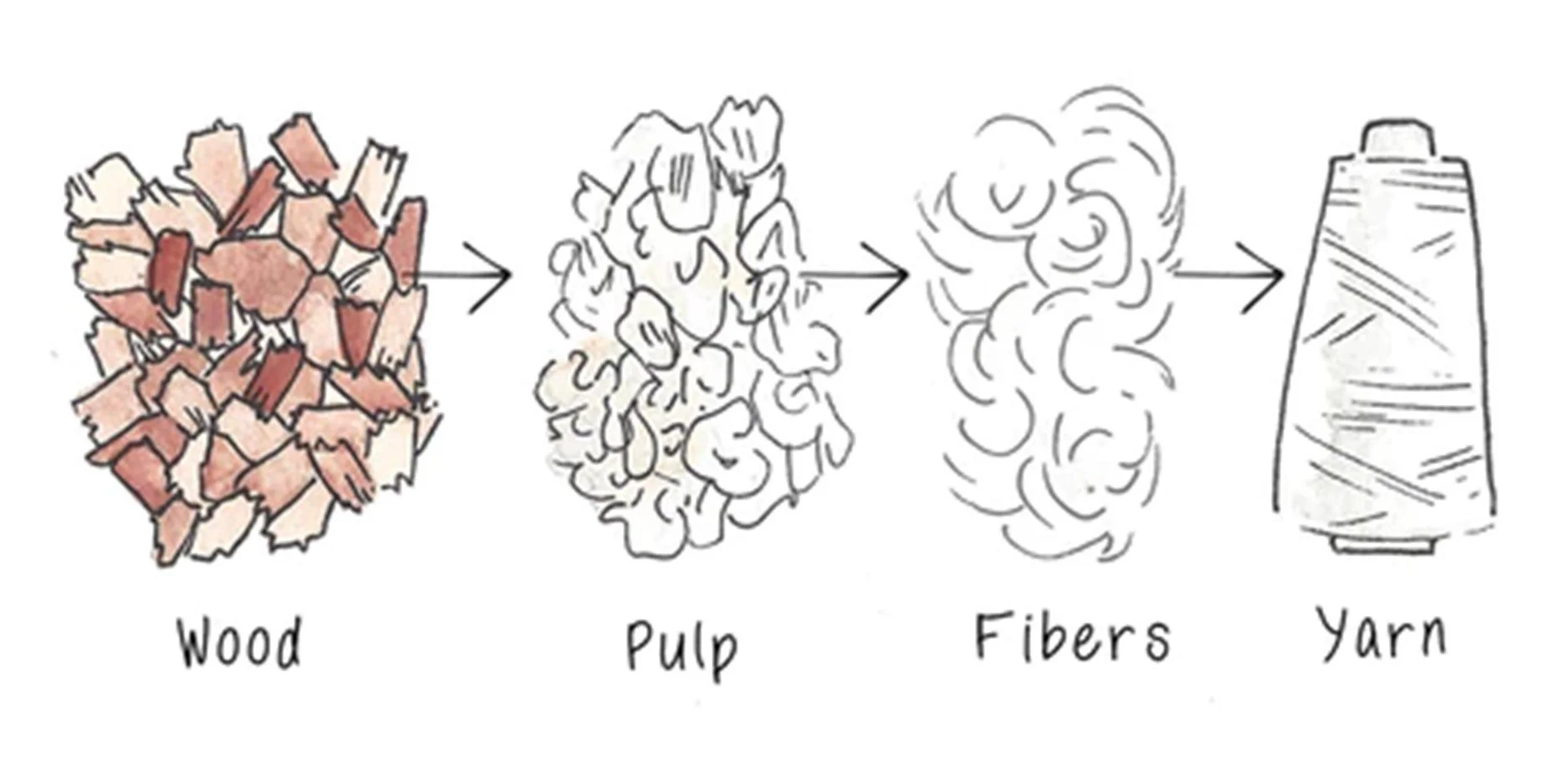
Manufacturers usually use a combination of Elastane (also called Spandex, Lycra) for elasticity and a Modal FR fabric for fire protection. Modal fabrics are derived from the pulp of trees, usually beech. This naturally derived raw thread, has a flame retardant substance incorporated throughout the cross section of the fiber for a permanent protection. LENZING™ FR used by many manufacturers is a Modal FR fabric
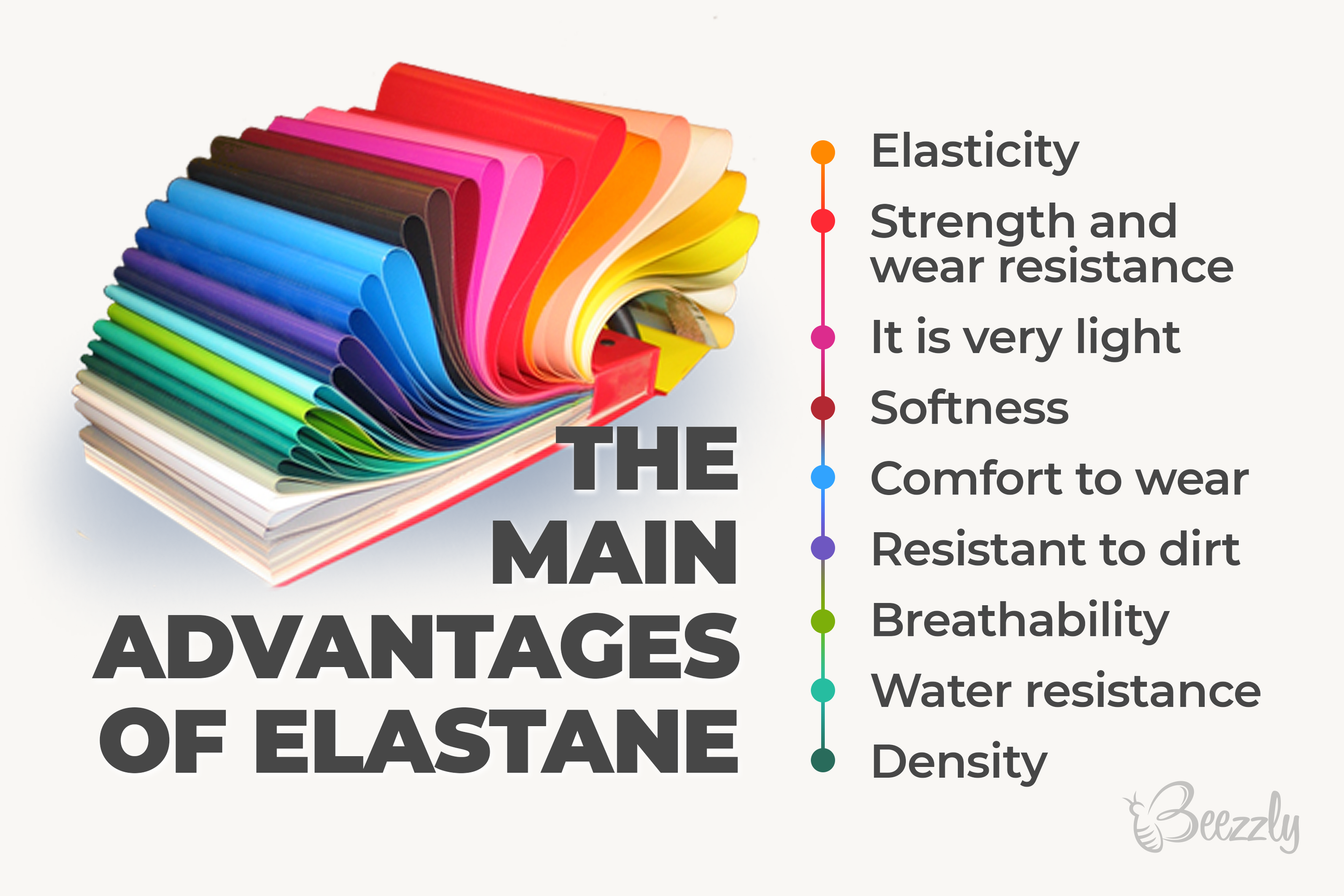
ELASTICITY AND FLAME RESISTANCE