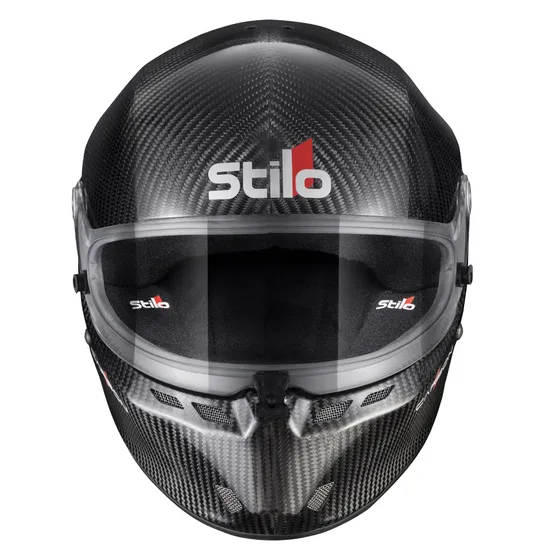
why buy a carbon fiber helmet?
Carbon Fiber is renowned for its high strength to volume ratio. Depending on the orientation of the fiber, a carbon fiber composite can be stronger in a certain direction or equally strong in all directions. A small piece can withstand an impact of many tons and still deform minimally. The complex interwoven nature of the fiber makes it very difficult to break.
I know carbon fiber helmets are lighter, but is it that important?
YES. Even minimal weight reduction aids driver comfort and reduces neck fatigue. Fatigue is a distractions and all distractions reduces driver focus with safety and performance consequences. This is particularly true for endurance racers. Our customers have confirmed this.
From Stilo…
”To take you back to high-school physics for a moment, you might remember the equation: weight = mass x gravity. Formula 1 (F1) cars pull at least 4gs when cornering. With that in mind, it’s easy to see how, under cornering loads, a helmet with a mass of a little over 2.5 pounds suddenly weighs more than 10 pounds, putting huge force on the driver’s neck. As a result, even reducing the mass by a couple of ounces adds up to a valuable weight saving.”
YES. Weight reduction is very relevant for junior drivers. Immature necks and shoulders have frames and muscles that are not fully developed to withstand the rigors of motorsports.
are carbon fiber helmets stronger?
YES. 100% carbon fiber helmets are significantly stronger than fiber glass helmets or other composite helmets, unless the other composite is Kevlar. Carbon/Kevlar composites increase strength with further weight reduction.
YES. Carbon fiber has an unrivalled strength-to-weight ratio. Stronger than steel yet significantly lighter than aluminum or fiberglass.
DOES CARBON FIBER OFFER OTHER BENEFITS?
YES. You should choose a carbon fiber helmet for all its additional distinct characteristics. This includes:-
Its increased strength. Carbon fibers are made from a very large number of fine, high-strength fibers than are woven together in various formats producing an exceptionally strong material.
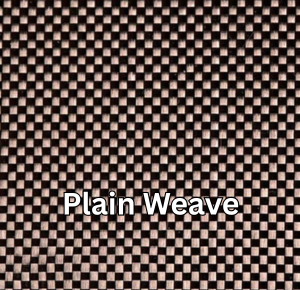
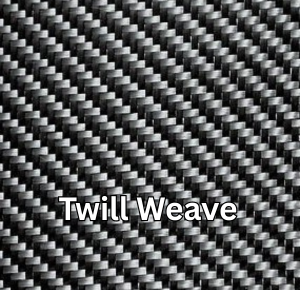
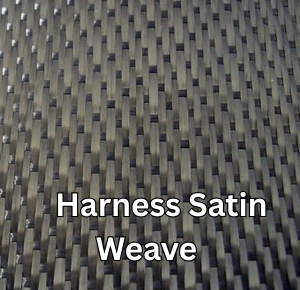
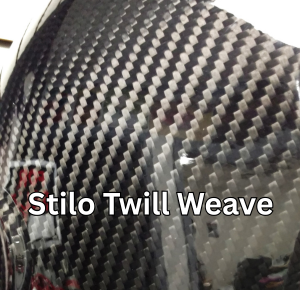
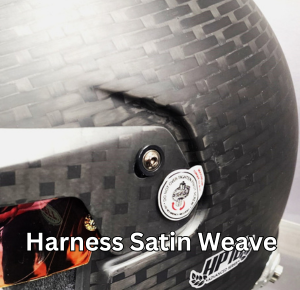
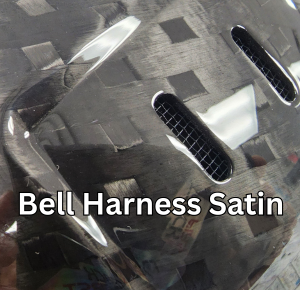
Its flexibility. Certain weaves (twill, harness satin) create a flexible, light, strong material that can be draped with ease. This makes it excellent for forming over complex shapes such as those used for aerodynamics.
Its increased safety & comfort. The increased strength of carbon fiber helmets with the decreased weight allows manufacturers to decrease the thickness of the shell allowing them to increase the depth of the interior crush and comfort padding.
Its superior Impact Protection. Carbon fiber (unlike the composites or fiber glass) does not crack - it bends. The tightly woven fibers create a rigid structure that resists penetration and deformation. On impact, the force dissipates and is absorbed over a wider area. A severe crash may result in micro cracking of the shell, but not a penetrating open crack.
For its reduced Rotational Forces. What does this mean? Think concussions.
A lighter helmet experiences less inertia during rotational impacts, which are increasingly understood to be a major cause of concussions and other brain injuries. By minimizing the helmet's mass, carbon fiber helps to limit these damaging rotational accelerations.
Its durability & longevity. Carbon fiber is a very durable material that resists degradation from environmental factors like UV radiation and moisture. Under normal use a carbon fiber shell can maintain its structural integrity for longer periods compared to other materials. The carbon fiber shell certainly better survives the normal abuse helmets receive while at the track - especially the hits from entering/exiting the car.
Its improved Aerodynamics. The properties inherent in the carbon fiber weave allows the smooth integration of aerodynamic features for open cockpits. In addition, the ability to alter the finish has proven aerodynamic advantages - especially at high speeds.
Its other relevant properties beyond a high strength to weight ratio: Rigidity, corrosion resistance, electrical conductivity, fatigue resistance, good tensile strength but Brittle, fire resistance/not flammable, non poisonous, biologically inert, x-ray permeable…
What about the weave? Are some better than others?
Remember Snell SA and FIA 8859 homologated helmets have undergone (and passed) rigorous testing. To meet the even more stringent strength testing FIA 8860 helmets have to be a carbon fiber shell.
The weave used by manufacturers is more to do with aesthetics, costs, drapability plus branding than increased safety factors.
Carbon fiber manufacturing is complex with many variables. To simplify, carbon fibers or filaments are formed then bundled together into what are called TOWS. Tows are identified by the number of carbon filaments they contain. For example, a 3k (common standard) tow contains 3,000 carbon filaments and is just .125” wide! This density of filaments gives carbon its strength.
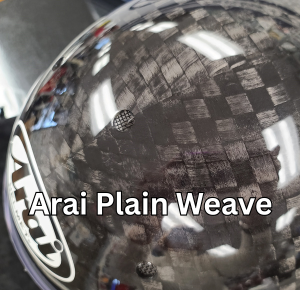
The tows are woven to form sheets of carbon fiber fabric. How they are woven produces variables from a high level of stability (stiff) to pliability. The most common weaves created are plain, twill, and harness satin. Twill and harness satin tows are more likely to be used in helmet manufacturing because they can be draped.
Why are some carbon fiber helmets distinctly more expensive that others?
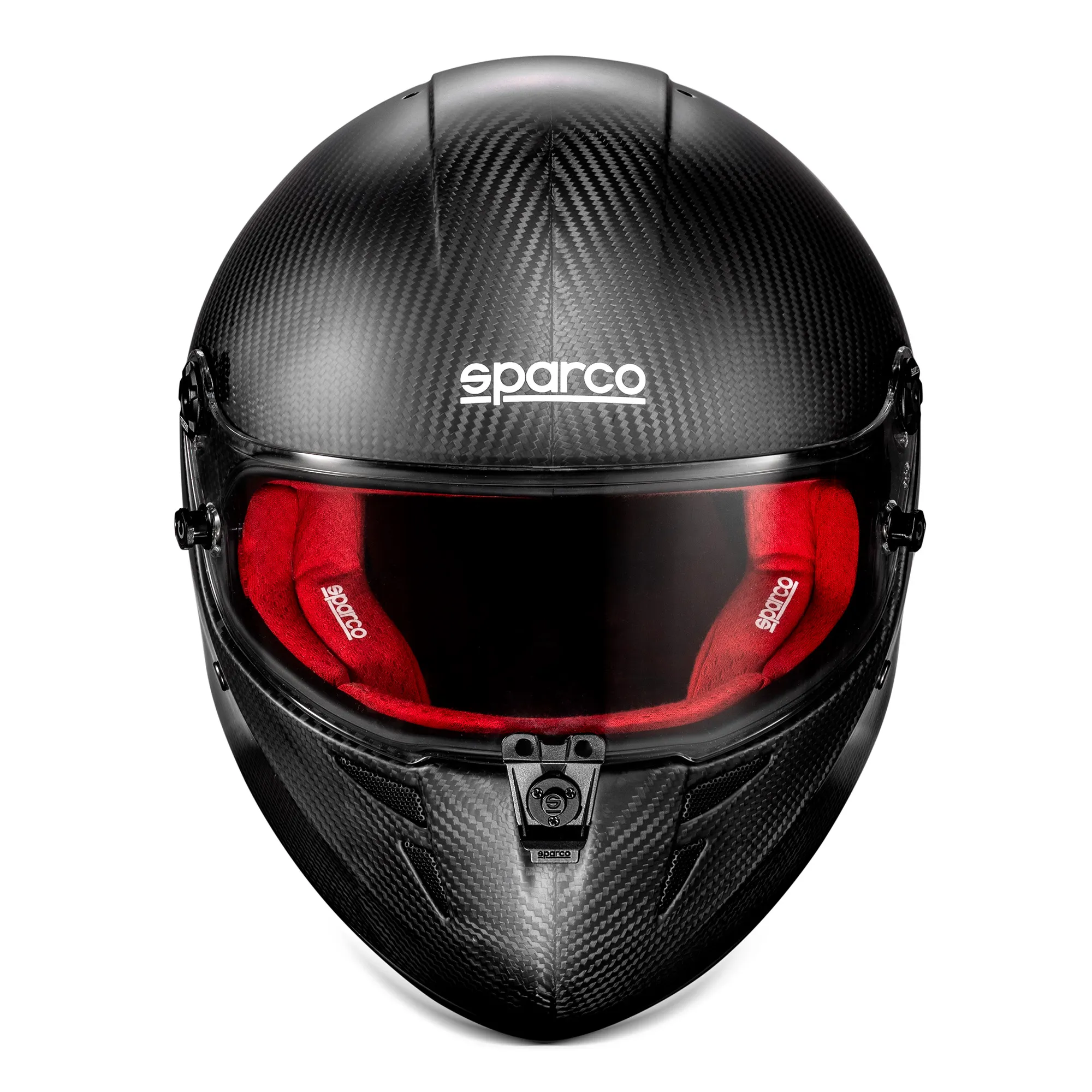
Not all carbon helmets are true carbon fiber helmets. The less expensive helmets may have composites shells with a carbon fiber outer layer. This is usually revealed in the manufacturers description.
Manufacturing process. Major brands, especially those that also manufacture their helmets (Bell, Schuberth, Stilo) have state-of-the-art research and production facilities with experience skilled employees. This allows the brand to be flexible. They control the process, the techniques, the technology, the characteristics for consistency and quality. They can introduce new designs with current technology that readily adapts the helmet to comply with the latest, mandated safety protocols.
Other brands have outsourced the production of their helmets. This can lower the price, but the manufacturer may be using older manufacturing techniques often produce helmets that are not as light or have the meticulous layering and resin infusion techniques to achieve the optimum strength, look and quality.
https://www.elevatedmaterials.com/carbon-fiber-weaves-what-they-are-and-why-to-use-them