
SFI AND FIA RACING APPAREL
-
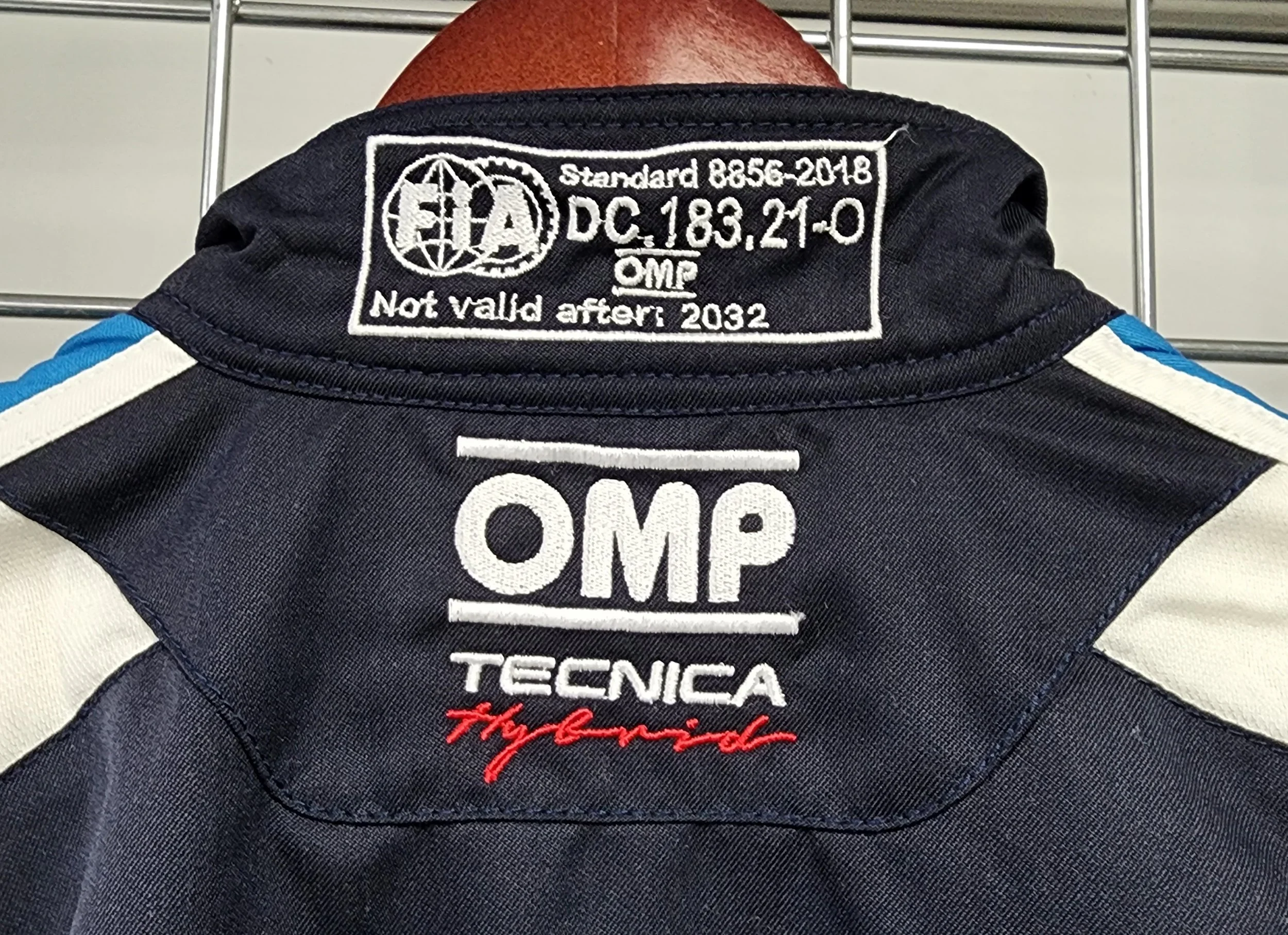
FIA 8856-2000 or FIA 8856-2018
-
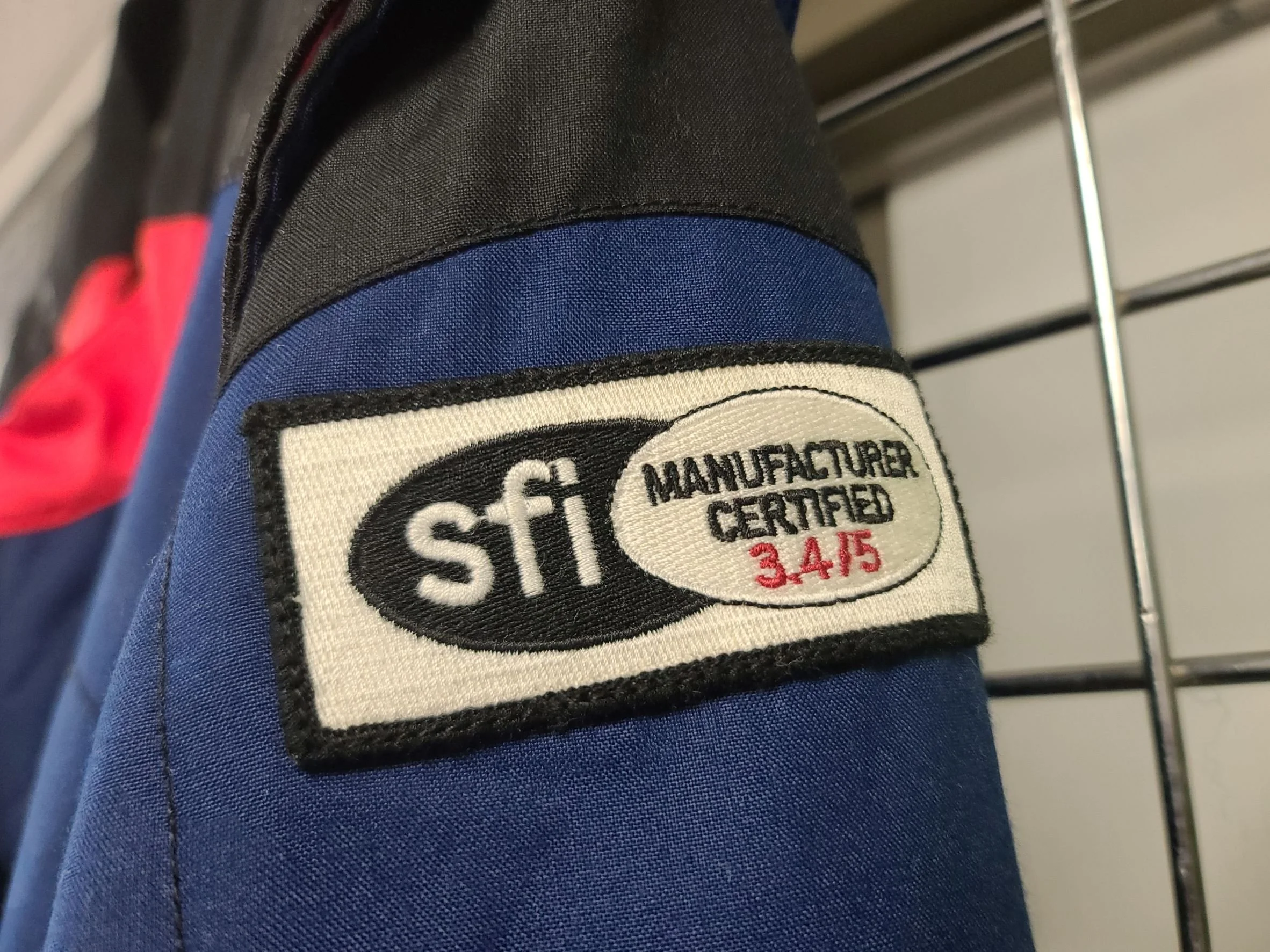
SFI 3.2 or SFI 3.4
SFI
QUICK SUMMARY
SFI Foundation (SEMA Foundation Inc - but now completely independent of SEMA)
SFI compliance tags are attached on the outer left sleeve of suit
SFI 3.2A tests a garment fire retardant capabilities.
The SFI 3.2/A spec contains a rating system based on the garment’s capability to provide Thermal Protective Performance (TPP) in the presence of both direct flame and radiant heat.
SFI 3.4A demonstrates the suit is compliant with 3.2A and can be screen printed.
SFI compliance is unique to the USA. If when with a international organization an FIA homologation will be required.
Scroll for more information
FIA
QUICK SUMMARY
The FIA (Fédération Internationale de l'Automobile)
FIA 8856-2000 & FIA 8856-2018 (latest) denote a FIA apparel homologation.
FIA compliance tags have an added hologram tag - which is unique to that product.
FIA tags are located in FIA designated positions and easily visible for inspections. For example the suit’s homologation tag is placed on the outside of the rear of the collar. The hologram and other information is placed on the zip’s inner lining.
FIA tags always display the FIA Standard for that product. The latest FIA 8856-2018 displays the Homologation Number and a ‘Not valid after’ year. This will be 10 years from the year of the products manufacture and the compliance lasts until the last day (December 31) of that year.
The FIA certification process is complex and in general more stringent see below. However, new compliance standards are only introduced when the FIA believes it is required because it will significantly improve the driver or vehicle safety.
The HTI™, or Heat Transfer Index, is a measure of the energy transfer occurring in a given zone. Effective heat transfer will generally yield a more homogeneous board temp (tight delta temperature across all components) and can allow for faster conveyor speeds (more throughput).
SFI
All SFI compliance tags (found on the outer left sleeve of suits and openly visible on every SFI product) demonstrates that the manufacturer has built the item to meet or exceed the SFI homologation. The SFI certification is unique to the USA, it will not be accepted outside the USA, or when racing with an international organization. The certification procedure for SFI compliance is very different to the FIA policy.
All driver, fire-retardant apparel that is certified to meet the SFI 3.2A spec has been laboratory tested and has passed the requirements of that test. (SFI 3.4A demonstrates the suit is compliant with 3.2A and in addition the fabric can be screen printed.)
Click for details SFI CERTIFICATION PROCESS
Click for details SFI 3.2A QUALITY ASSURANCE SPECIFCATIONS to be met by manufacturer
A COMMON MISUNDERSTANDING: The SFI 3.2/5 tags DO NOT represent the actual number of fabric layers. They represent the TPP (Thermal Protective Performance) of the suit. Suits of various layers can have the same TPP. Lighter suits often have a higher TPP since the suit’s fabric has been woven using a light, state-of-the-art, aramid (fire-resistant) threads such as Nomex. Today, there are a wider range of clever, technical fabrics being used by the manufacturers, who are always aiming to improve both driver comfort while increasing the safety values of their racing suits.
The SFI 3.2/A spec contains a rating system based on the garment’s capability to provide Thermal Protective Performance (TPP) in the presence of both direct flame and radiant heat. The purpose of the TPP is to measure the length of time the person wearing the garment can be exposed to a heat source before incurring a second degree, or skin blistering, burn. For Example SFI 3.2A/5 has a TPP value of 19. This designates the driver is protected for 10 seconds before suffering a second degree burn.
Click for details THE SFI 3.2/A
UNDERWEAR: It is highly recommended that fire resistant underwear is worn with every type of driver suit. It increases the TPP of your protection (SFI SPECIFICATION 3.3) SFI 3.3 demands a minimal TPP value of 6. Wearing fire-retardant underwear also adds another air gap (increased protection) between the heat source and your skin. LEARN MORE
Sanctioning organization and racing series will not accept a single layer suit (SFI 3.2/A1) unless the suit is worn with tagged fire-retardant underwear. Professional racing series will require the underwear. Fire is the greatest fear of racers - increase your protection.
A garment’s insulation capability is also affected by the fit of the suit. A suit worn too tight will compress the air gaps and allow heat to reach the skin faster. When it comes to increased fire protection - air gaps are your friend.
FIA
In 2018 the FIA amended their safety apparel homologation to FIA 8856-2018 from 8856-2000 and also changed their testing measurement standard. In general, FIA 8856 protective clothing standard is focused on having equipment that entirely protects the driver against flames and exposure to heat for around 15 seconds (8856-2000), and around 18 seconds (8856-2018) before suffering 2nd degree burns, with the exception of hands. (The time during which the hands are protected against 2nd degree burns is a compromise between heat protection, comfort and dexterity.)
“… FIA Standard 8856-2018 offers several advances by enhancing the tests that each piece of clothing must pass. One major improvement has been to what is called Heat Transfer Index (HTI), which has increased by 20 per cent. Nuno Costa, the FIA’s Head of Competitor Safety, says this was key when transitioning from the previous standard, to help protect drivers against direct flames and second-degree burns.” FIA
The HTI™, or Heat Transfer Index, is a method for measuring the heat transmission through materials or assemblies used in protective clothing and gloves when exposed to a specified convective heat source.
“The problem we had with the previous standard is that while we were doing heat transmission on the overalls and gloves, for underwear, balaclavas, socks and shoes we only had a requirement with the density of the material,” explains Costa. “Along the years the drivers started to wear materials better adjusted to the body for comfort, so density was not relevant anymore.” https://www.fia.com/news/strong-suit-auto-magazine
The FIA homologation (approval) process is complex, defined and well regulated - so time consuming.
In detail…. The FIA (Fédération Internationale de l'Automobile) is the governing body for world motor sport and the federation of the world’s leading motoring organizations and ASNs. (An ASN is a national automobile club or other national body recognized by the FIA or the CIK-FIA as sole holder of sporting power in a country.) To achieve a listed FIA homologation a manufacturer must follow a template issued by the FIA. They will then be liaising with their country’s ASN to seek their own and the FIA approval. Products have to be tested by a FIA approved test house and one that is related to the safety equipment for which the homologation is sought. The product must be listed in one of the Technical Lists published on the FIA. The ASN acting as the intermediary between the FIA and the manufacturer of the safety products oversees the process. It liaises with the manufacturer regarding the status of the homologation request. The ASN presents the results to the FIA for approval. Once approval is achieved the manufacturer can add the specified FIA tag on their product. Each product has separate rules regarding the duration of the homologation. The FIA can update their testing criteria at any time. This is usually done when the FIA recognizes the need or the benefits of any new technology.