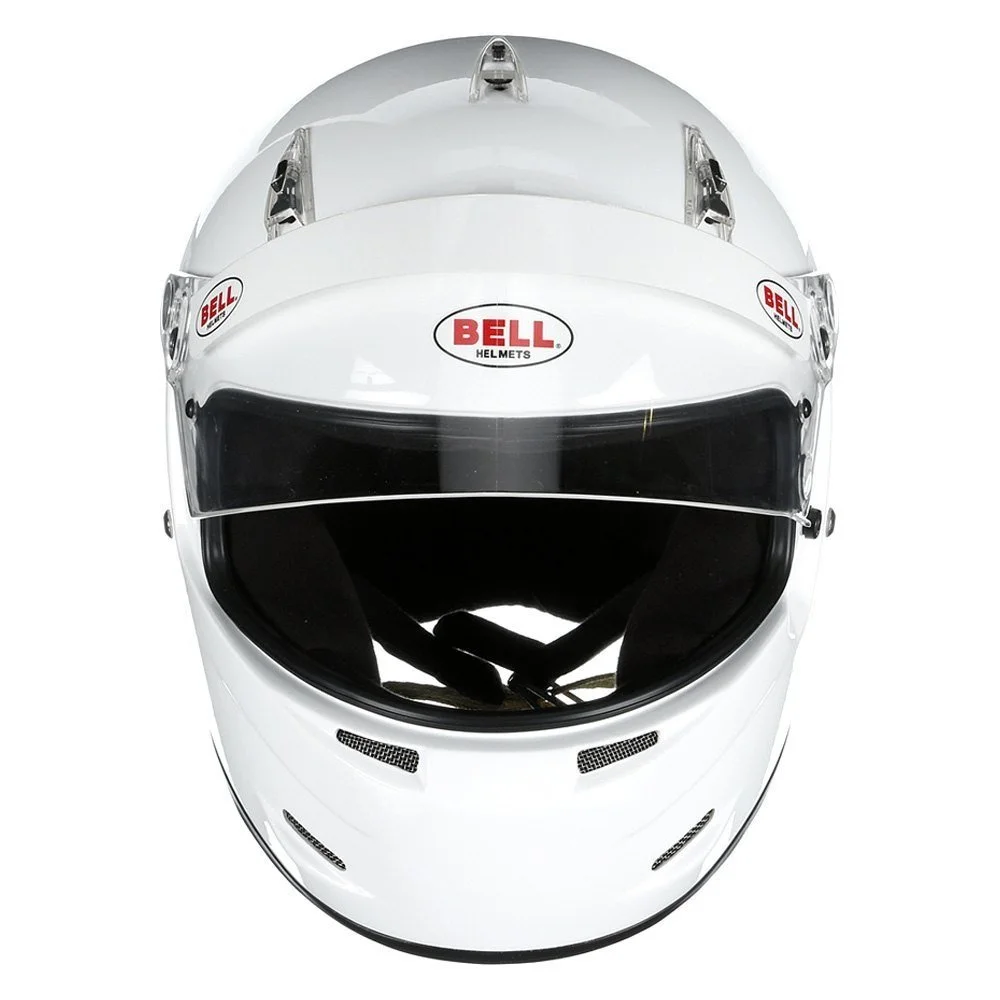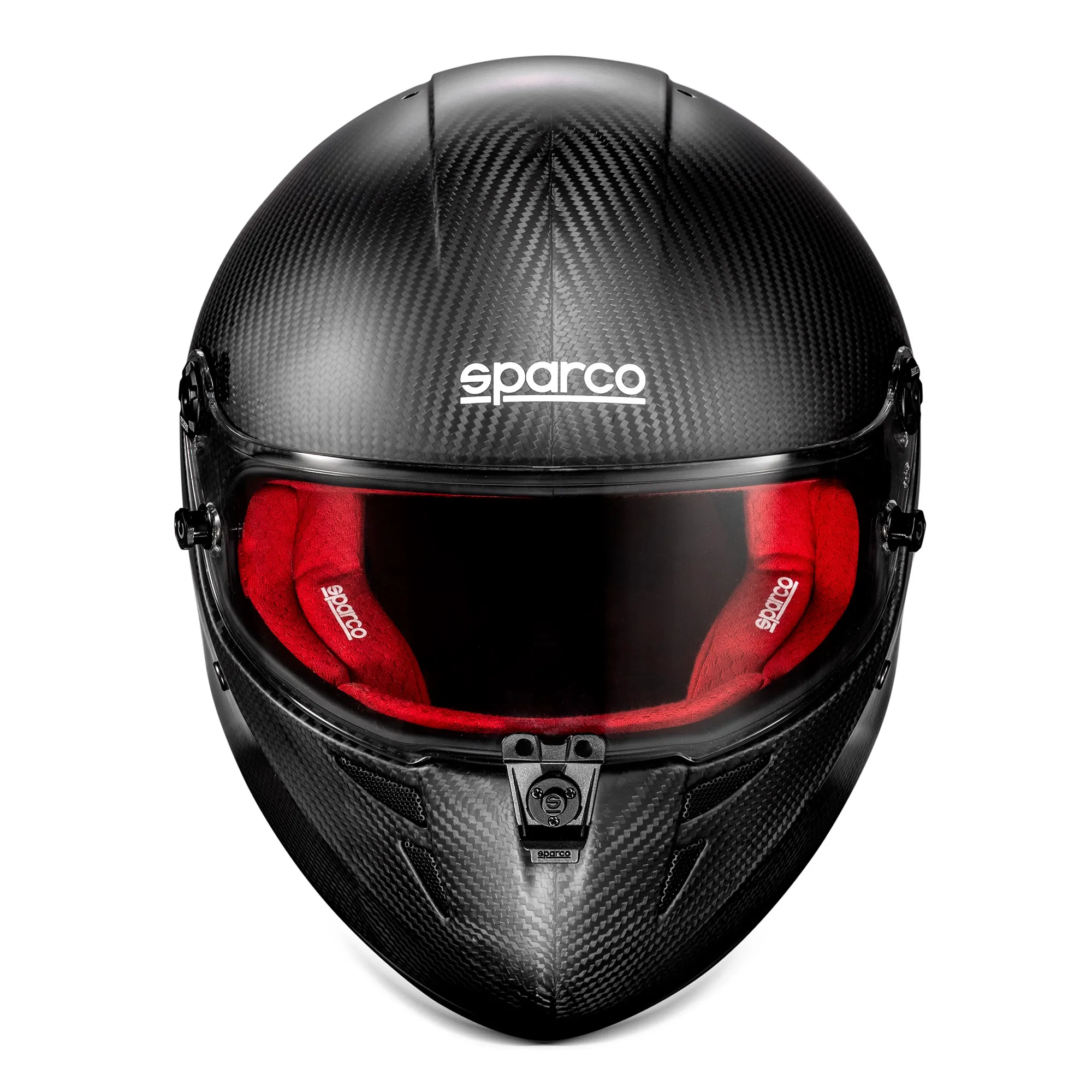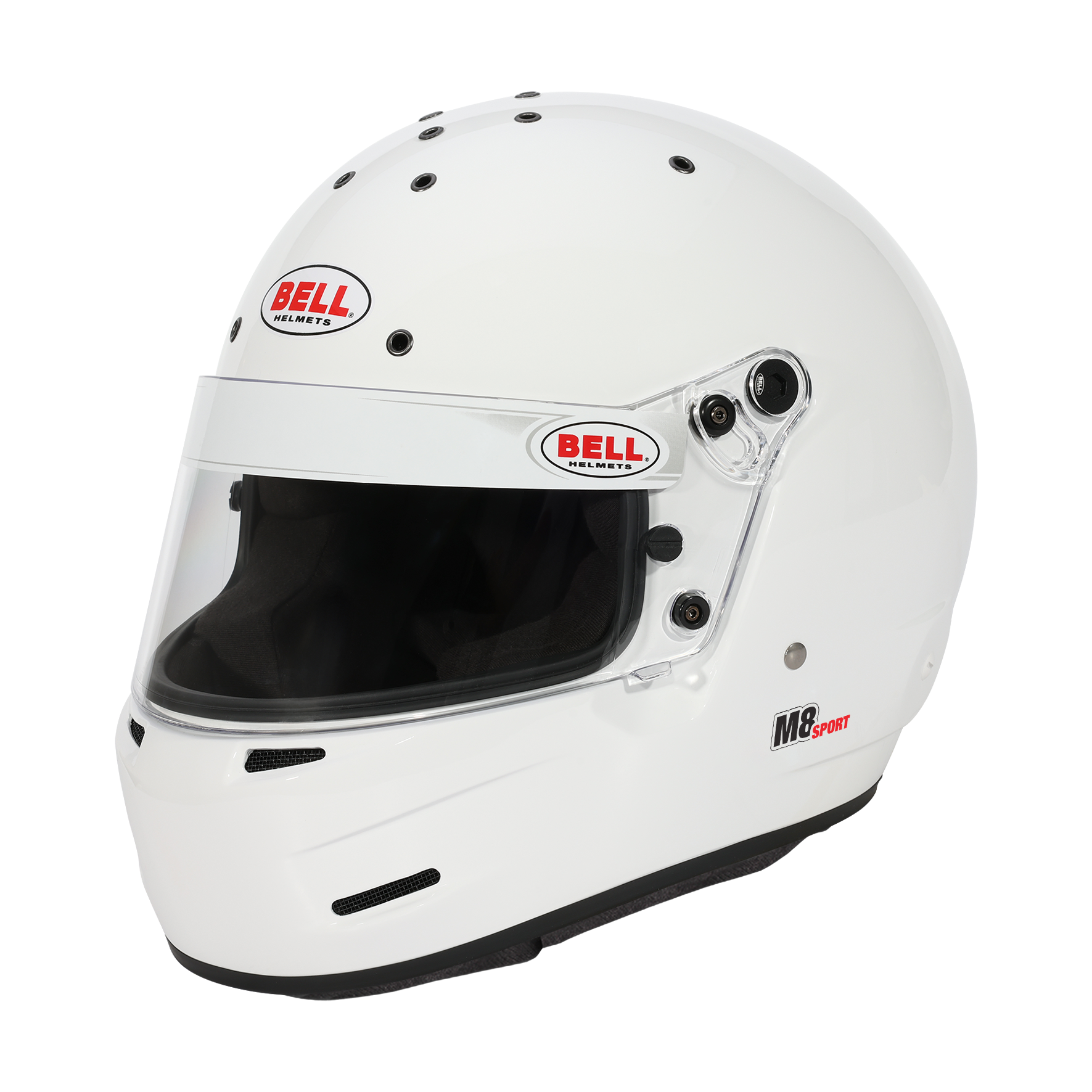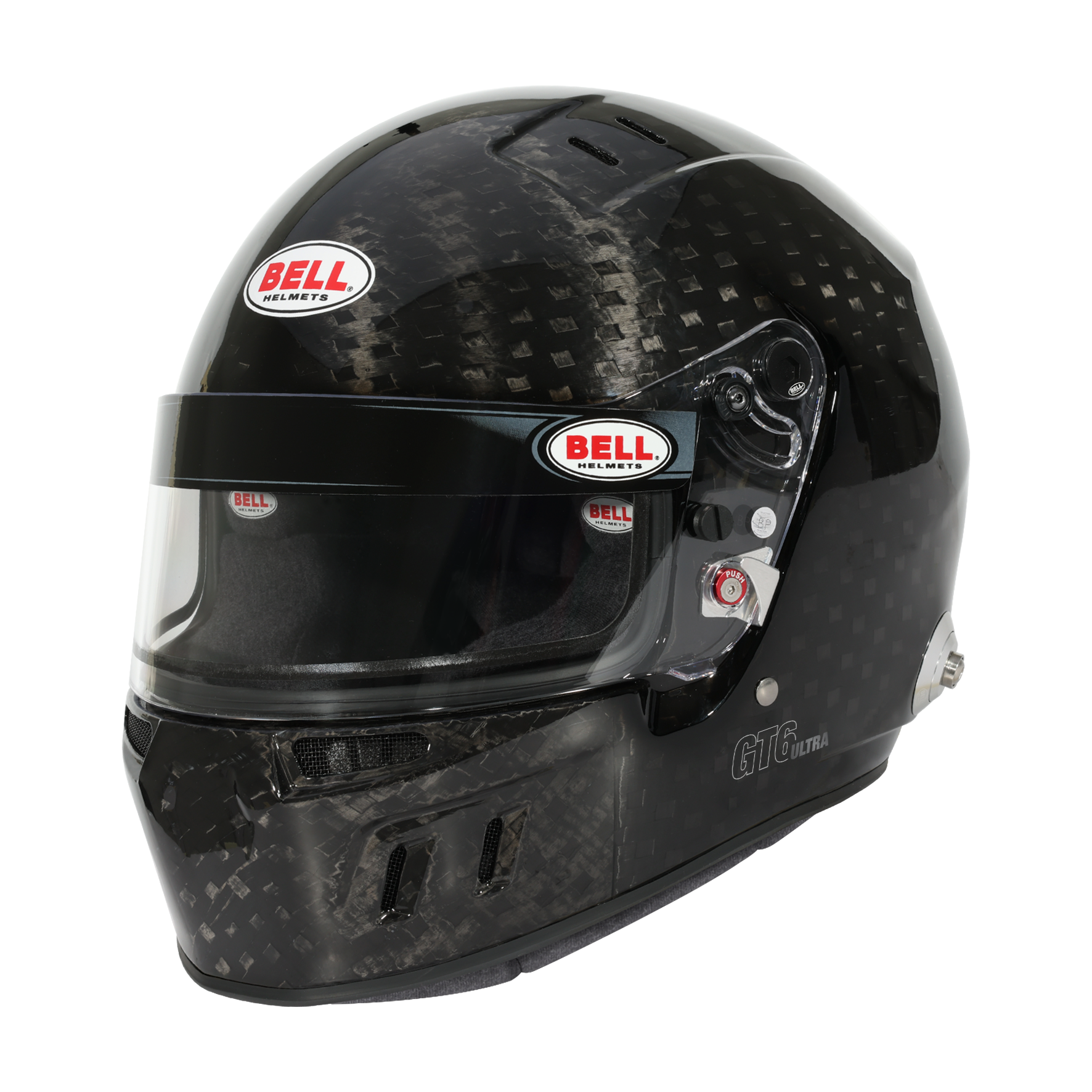
the auto RACING helmet - what you need to know
what you need to understand
Auto sport helmets are NOT the same as motorcycle or karting designated helmets. The auto sport helmet has fire-retardant features and tested to survive the unique rigors & impacts associated with road racing and/or high performance driving.
Autosport helmets, in general, are accepted at all motorsport events - but not the other way around. Motorcycle, and karting helmets may be accepted at low speed events such as autocross or indoor karting. They are NOT accepted for events held on road courses, drag strips (or similar.) This restriction does includes HPDE/DE programs. Snell K regulates karting helmets. Snell M regulates motorcycle helmets.
CHECK, your groups rules & regulations - early. Preferably when your register for the event(s)
THE basics for hpde students & other track events
You will need a helmet. If you want to borrow or rent, act early since there are very limited options at the track.
Always check your event’s regulations. Some allow open-face helmets, most do not.
For HPDE events, It is now highly unlikely that anything but a certified fire-retardant auto helmet will be accepted. For safety and insurance reasons most groups do not allow motorcycle or karting helmets.
Snell SA and FIA 8859, FIA8860 are the accepted helmet standards.
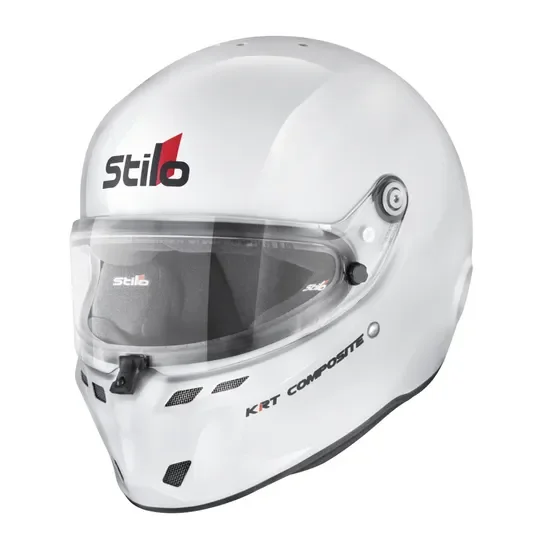
Helmets are classed as open-face or full-face. Some groups do not allow open-faced helmets, especially for road tracks.
the snell and the fia regulate helmet safety standards
Snell Foundation:The SNELL foundation is a non-profit organization that issues safety standards for helmets. The SNELL SA (Special Application) standard is specifically for auto racing. Snell SA is widely used and accepted in the USA. SNELL M is the standard for motorcycles. SNELL K is for karting helmets.
NOTE: Every five years SNELL introduces a new standard which manufacturers must comply with. They do this to keep the helmets criterion current with the latest helmet technologies, innovations, safety demands and materials. Most amateur track groups and racing series allow helmets which have the current tags or the previous homologation tags. For example, when the SA2025 tagged helmets arrived (Oct 1 2025) SA2020 helmets will still be accepted, but not SA2015 helmets.
FIA (Fédération Internationale de l'Automobile):The FIA sets international safety standards for racing helmets, such as the FIA 8859-2015 standard and now the recently introduced FIA 8859-2024. FIA helmets are accepted in the US, but only mandated if you are racing in an international FIA sanctioned racing series such as IMSA.
Note: All SA2025 helmets are now mandated to comply with the FIA 8859-2024 homologation.
NOTE: FIA helmets standards (unlike Snell) are not introduced every five years. The FIA introduces new homologations when they judge circumstances, technology & safety issues warrant an update.
FIA tagged helmets are rigorously tested. The FIA standard equals and in some area exceed those of Snell SA. However, in the USA some track inspectors are only trained to look for the Snell tags and question a FIA tag - you should arrive informed.
Many Snell SA2025 helmets are dual tagged. You will find the FIA tag in the inner lining. This generally applies to the more expensive helmets, especially each brands’ carbon fiber series.
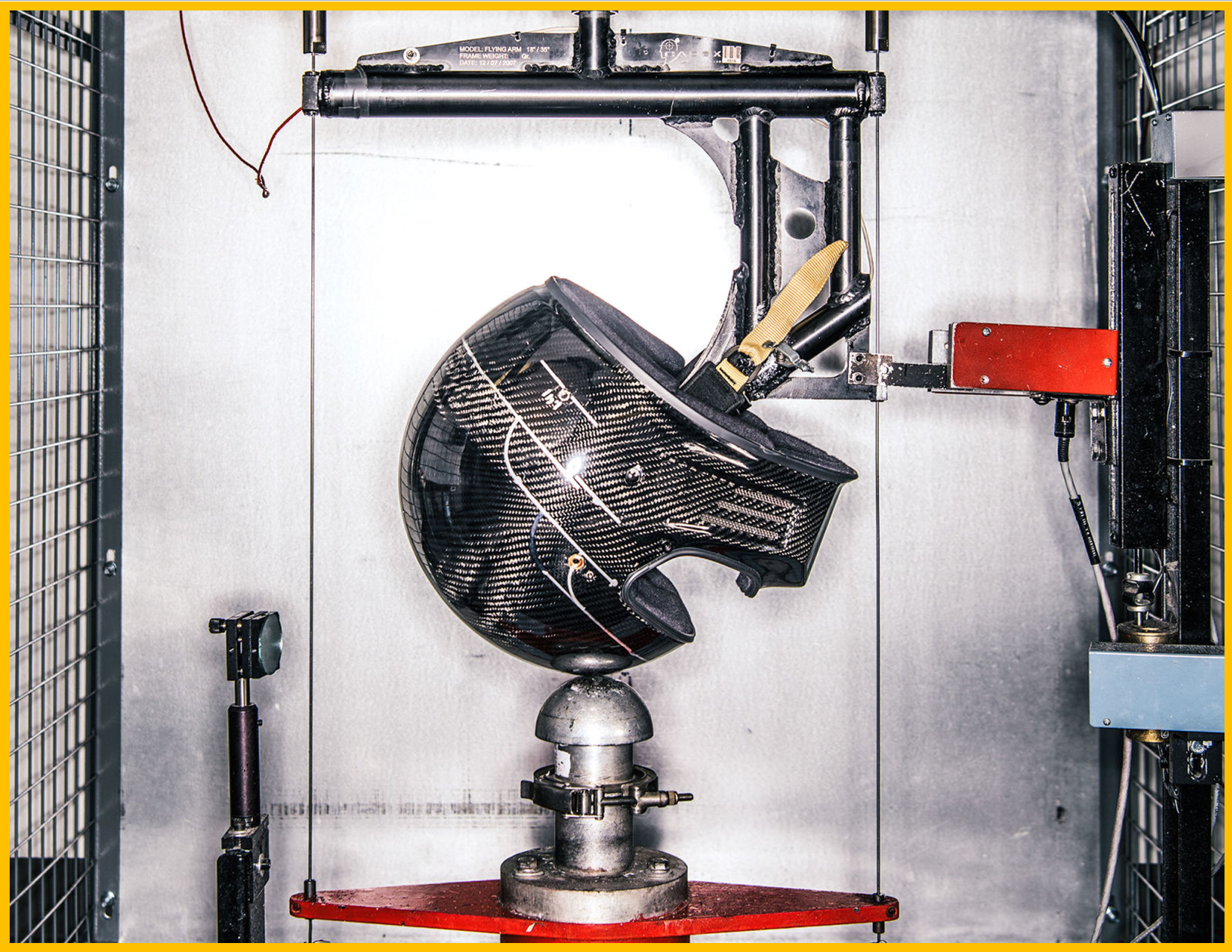
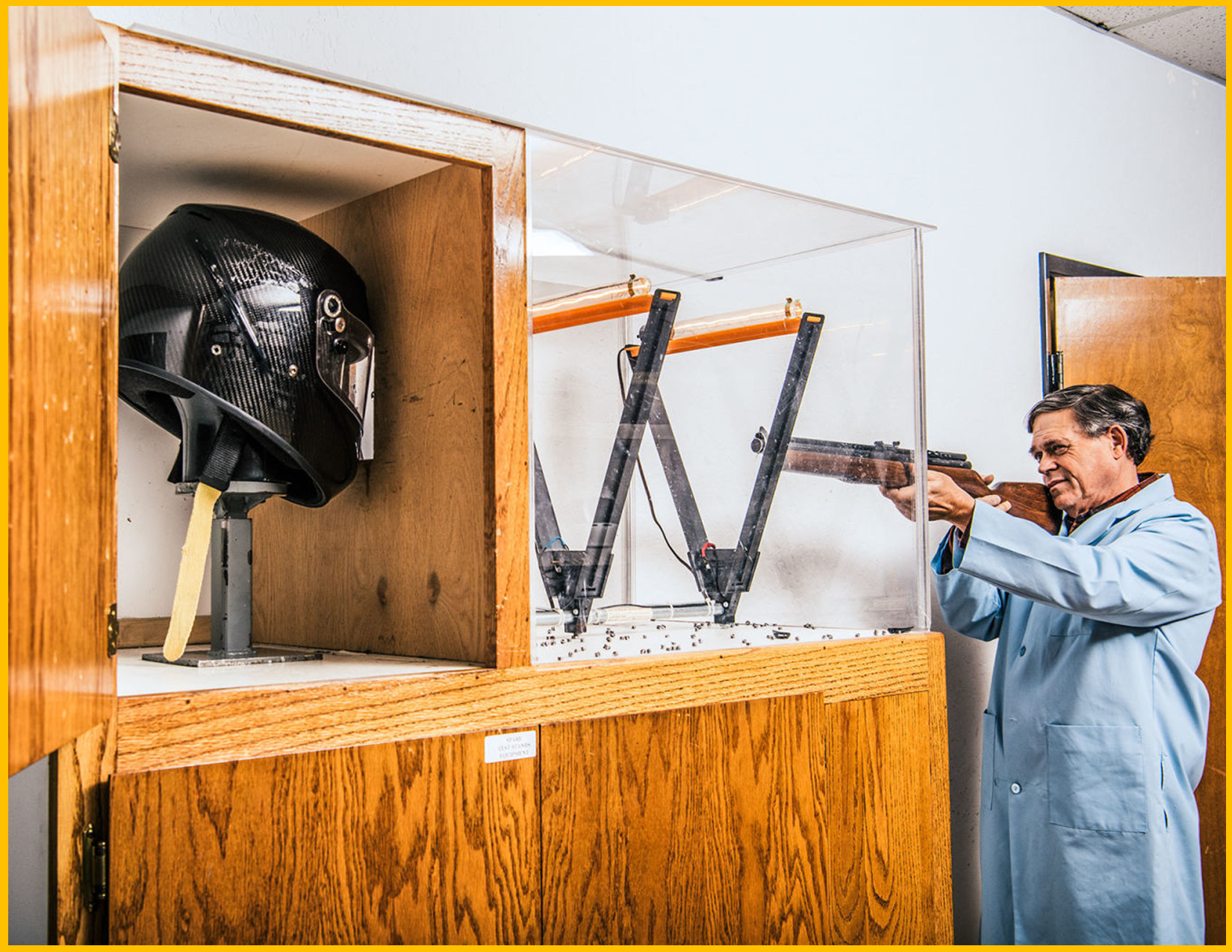
Auto helmets and their visors are rigorously tested by the The FIA & Snell for strength, fire-retardancy, sizing, comfort, impact resistance, durability and more.
Snell SA2025 was introduced October 1 2025
The October 2025 arrival of SA2025 helmets came with various ETA issues. Those that were available quickly sold. The problem is still ongoing. However, motorsports groups and track organizations have been accommodating by delaying their mandated change-over date. We advise you check since we some tracks have surprised us with more stringent rules than the events organization.
FOR YOUR FIRST HPDE EVENT we recommend you prioritize…
Fit, comfort, features, your car, budget and in that order… Note, the helmets have already passed strict safety standards
FIT - an ill fitting helmet will be a distraction, and all distractions are a safety issue. You will suffer the loss of focus. And this will also affect your driving performance. Your helmet should present a ‘snug’ fitment. Your head should not move independently inside the helmet. There should be no pressure pain on the forehead or on the temples. The cheek pads should add pressure to your cheeks and cause them to fold, but not painfully (they will soften.) If you cannot pull the helmet down sufficiently to cover your chin it is too small or the wrong mold got you.
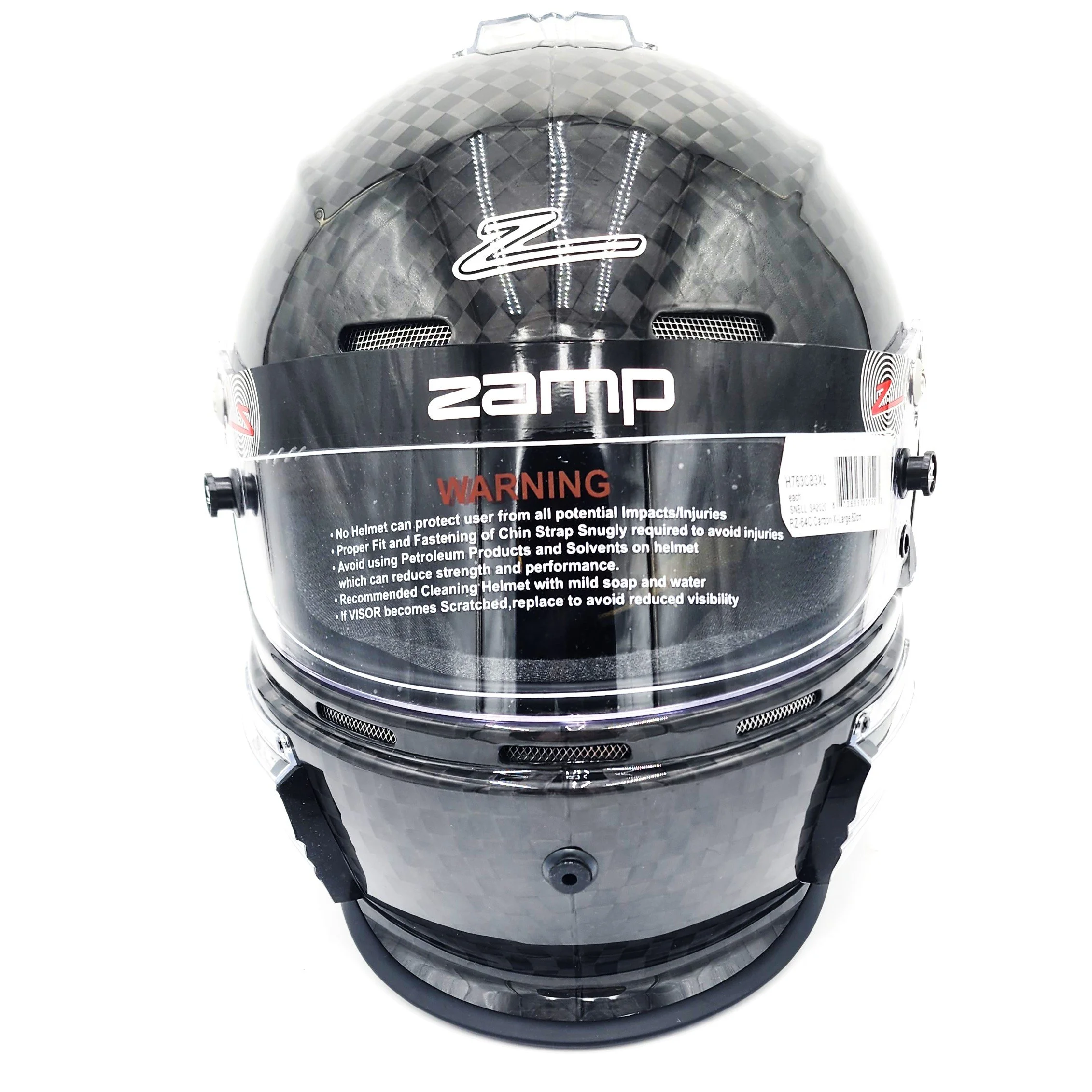
COMFORT- comfort does increase as the price increases. Budget helmet shells are heavier. They use harder/heavier interior foams and less soft lining fabric. A comfortable helmet will enhance your driving experience. Helmets are heavy and if you intend wearing one regularly or for any long driving stints we highly recommend a carbon fiber helmet.
FEATURES- For HPDE students we recommend a larger than standard visor (shield.) For novices, helmets can feel claustrophobic, and the sensation is increased by the enclosed eye-port. In addition a wider and larger eye-port helps, increases the drivers peripheral vision. HPDE students need peripheral vision for increased ‘situational awareness’. Race drivers have their car’s set-up to reduce head movement so they can be focused on their markers.
YOUR CAR - certain car models have very congested interiors - in particular low roof lines. Helmets can add 2 inches to your height resulting in hitting door frames, rubbing (and damaging) the lining - also your helmet. There are brands, profiles and models that help - we can advise.
Drivers with open cockpit cars can benefit from additional aerodynamic features such as duckbills (stop the helmet from lifting); the removal of exterior accessories (Stilo’s ‘naked’ range); a mold style that is closer to that of motorcycle helmets.
BUDGET. In this industry the more you pay the more additional features and advantages you will benefit from - including the all important weight factor (less) - along with increased comfort and improved strength. The benefits of Carbon Fiber Helmets.
ADDITIONAL FEATURES (include but not limited to) - exotic materials, aero, ventilation, built-in communication, anti-fogging visors, multiple visor tints, removable padding, softer padding, graphics, more precise sizing…
HELMET SERIES - most brands offer an introductory, pro and/or an advanced series. They will categorize their helmets into Composite or Carbon Fiber. The pro and advance series are commonly dual FIA and Snell tagged.
REMEMBER - all motorsport helmets have been tested to meet a minimum safety criteria for their discipline. Your purchase of a less expensive helmet does not mean you have compromised your heads protection. However, your heads safety, protection and comfort will increase with the more you spend. AND since this is a major, mandated purchase which you could be with you for the next 10 years - we recommend you purchase carefully and maximize your budget - to get it right the first time.